There are many ways to feel humbled as a poet (as the author of a mere chapbook, I'm familiar with most of them). But it can be equally disturbing to see a poet you hold in esteem fading into obscurity. For whatever reason, I don't feel like naming names at the moment -- perhaps out of a sense of denial that such a wonderful writer could be someday forgotten.
Since I'm on something of a budget, it's not beneath me to order books online from sellers that specialize in used books. In fact, I've saved quite a few shillings by settling for used copies. And since I often forget what I've ordered, the arrival of a small package in the mail is often a pleasant surprise, akin to receiving a book in one of those chain mail games where you send one of your favorite books to a stranger. I open them eagerly, and am often delighted to find a volume by an other who just happened to cross my mind a week or so ago.
Not for the first time, the volume I ordered most recently was one that had been decommissioned by an academic institution (in this case, Harvard College). I find it sad to think that curious readers browsing the open stacks at Harvard's library may not have the good fortune to stumble upon one of the most esteemed poets of my generation. He happens to be a writer I met once or twice at an LGBTQ writing conference a few decades ago, and he was quite charming in person. He's also one of the many writers of his generation who died well before his time, so his poetic output -- though I would consider him prolific -- was limited to a few volumes.
I'm trying to be optimistic. Perhaps Harvard had redundant copies of his last collection. Perhaps students at one of the nation's most esteemed universities still have opportunities to stumble upon his work. But for the moment, Harvard's loss is my gain. I finally do have a copy of his last volume in my collection.
Wednesday, July 4, 2018

Thursday, May 24, 2018
That Drifting Feeling
Matthew Zapruder has a nice essay online (an excerpt from his new book) at the Paris Review about the experience of reading poetry. Rather than trying to summarize it, I'll let the link and this money quote suffice. "Poetry is a constructed conversion on the frontier of dreaming." Like Zapruder, I had difficulty enjoying or appreciating the poetry of John Ashbery when I first encountered him. Now, of course, I revere John Ashbery's poems. But back in my youth when I first encountered him my reading expectations were, well, conventional. I expected a clear theme, discernible images and even a plot. A little epiphany at the end of the poem that tied it all up nicely was much appreciated. Eventually I got used to the idea of an open field and the pleasures of drifting through various landscapes and geographies. Only then did Ashbery start making sense to me. But as the Talking Heads told us, "Stop Making Sense" is maybe a better strategy for conveying a mood or feeling.
Thursday, May 10, 2018
Poetry Indoors and Outdoors
Ah, the season is finally upon us when poetry can move outdoors. At first I was a little discombobulated by the Bryant Park "reading room," which is actually just a few rows of benches and some sound equipment and Bryant Park where I've heard some excellent poets read in recent years. Last year, Ocean Vuong and Phillip B. Williams were among the attractions. This week, in what might have been the reading room's first poetry event of the year, I had the pleasure of hearing Jim Moore (one of Minnesota's best known poets) read alongside Marilyn Nelson and Katha Pollitt.
It can be a little distracting, sitting outside in blessed weather, one's attention sometimes drifts to the jugglers on the other side of the park. Tuesday night's reading consisted of a celebrations of the "poetry in motion" program, which posts broadsides of poetry in subway and bus stops. The readers not only read their own work that had been included in the program but also some of their favorite poems by other writers that have graced the subway walls.
And on Wednesday, I descended into the long, somewhat foreboding basement of the Cornelia Street cafe, another storied venue for literature and music, to hear Timothy Liu and some of his colleagues and students from William Paterson University read. Timothy Liu is always entertaining and upbeat, even when reading poetry that delves deeply into the body's most secretive crevasses and desires. His colleagues, poets Paul LeTorre, Karthik Purushothamam, and Scott Wordsmith were reminders that much of the most vital work being written today is being produced by young poets I often haven'theard of before I finally hear them read. Purushothamam collaborated on one piece with a singer songwriter who had written a song which shared some anti-Trumpian affinity with his poetry, which was a reminder that whenever musicians and poets perform together, it usually brings out the best in both of them.
And of course, I can't say enough about the Split This Rock poetry festival in Washington, D.C., which I finally attended in April. The fusing of poetry and activism seems especially needed in our current times, and perhaps earlier generations of poetry and activism have suffered from a stigma against politically informed poetry. Time we all got "woke" to the value of poetic activism. Below are some pictures.
It can be a little distracting, sitting outside in blessed weather, one's attention sometimes drifts to the jugglers on the other side of the park. Tuesday night's reading consisted of a celebrations of the "poetry in motion" program, which posts broadsides of poetry in subway and bus stops. The readers not only read their own work that had been included in the program but also some of their favorite poems by other writers that have graced the subway walls.
And on Wednesday, I descended into the long, somewhat foreboding basement of the Cornelia Street cafe, another storied venue for literature and music, to hear Timothy Liu and some of his colleagues and students from William Paterson University read. Timothy Liu is always entertaining and upbeat, even when reading poetry that delves deeply into the body's most secretive crevasses and desires. His colleagues, poets Paul LeTorre, Karthik Purushothamam, and Scott Wordsmith were reminders that much of the most vital work being written today is being produced by young poets I often haven'theard of before I finally hear them read. Purushothamam collaborated on one piece with a singer songwriter who had written a song which shared some anti-Trumpian affinity with his poetry, which was a reminder that whenever musicians and poets perform together, it usually brings out the best in both of them.
And of course, I can't say enough about the Split This Rock poetry festival in Washington, D.C., which I finally attended in April. The fusing of poetry and activism seems especially needed in our current times, and perhaps earlier generations of poetry and activism have suffered from a stigma against politically informed poetry. Time we all got "woke" to the value of poetic activism. Below are some pictures.
 |
| Katha Pollitt |
 |
| Jim Moore in Bryant Park |
 |
| Sarah Browning, Ellen Bass, Elizabeth Acevedo, Solmaz Sharif at Split This Rock |
 |
| Danez Smith, Franny Choi, Fatimah Asghar, Hieu Minh Nguyen and Sam Sax also present at Split This Rock. |

Saturday, March 17, 2018
Farinelli and the King
Let me some up the best new play I've seen on broadway this year by saying this: I'll be shocked if Mark Rylance doesn't win a Tony Award for his portrayal of Spain's King Philippe V. For nearly the entire play, he is onstage, often deranged but always commanding attention. For that matter, the entire cast was great.
The play is Shakespearean in its scope and ambition. The fact that it's a historical play only makes it seem more timeless, though Farinelli and the King premiered in London in 2015. The music that accompanies the action lets the audience feel the way music can serve as a healing power even as we watch the king stammer in and out of sanity, with his bouts of reasonableness usually buoyed by the presence of the opera star Farinelli's music.
Playwright Claire van Kampen has done a magnificent job with a classic subject: an unhinged ruler presiding during perilous times. Many people see parallels between her King Philippe and the current U.S. President, but I see our current administration and his entire party as more corrupt and disingenuous than crazy (though there's certainly an element of that at play too). At any rate, the play is not so much a satire about our current times as a timeless meditation upon music's solace for the soul.
The play is Shakespearean in its scope and ambition. The fact that it's a historical play only makes it seem more timeless, though Farinelli and the King premiered in London in 2015. The music that accompanies the action lets the audience feel the way music can serve as a healing power even as we watch the king stammer in and out of sanity, with his bouts of reasonableness usually buoyed by the presence of the opera star Farinelli's music.
Playwright Claire van Kampen has done a magnificent job with a classic subject: an unhinged ruler presiding during perilous times. Many people see parallels between her King Philippe and the current U.S. President, but I see our current administration and his entire party as more corrupt and disingenuous than crazy (though there's certainly an element of that at play too). At any rate, the play is not so much a satire about our current times as a timeless meditation upon music's solace for the soul.
Saturday, March 10, 2018
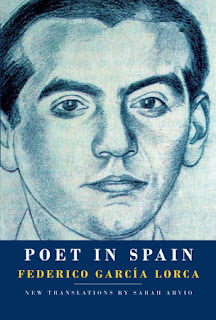
Frederico Garcia Lorca Comes to Town
I was very pleased that Alfred A. Kopf, The New School and the Poetry Society of America teamed up to host a reading of new translations by Sarah Arvio of the great Spanish poet. Some of the participants exclusively read the English translations, while others read Lorca's poems in both Spanish and English.
Readers included Cyrus Cassells, Rachel Eliza Griffiths, Nathalie Handal, Roberto Montes, Rowan Ricardo Phillips, Philip Schultz and Sarah Arvio herself.
I'm always taken aback when I realize how young Lorca was when he perished, and how much great work he created during what was essentially his youth. It was also interesting to hear stories about how his memory was not celebrated for a long time in Spain, though he is widely celebrated today. Minus the part about being presumably tortured and killed for his homosexuality and political stances, the arc of his billowing posthumous fame I think is kind of every writer's dream. Like I said, minus the Civil War discourtesy of his presumed assassination.
Readers included Cyrus Cassells, Rachel Eliza Griffiths, Nathalie Handal, Roberto Montes, Rowan Ricardo Phillips, Philip Schultz and Sarah Arvio herself.
I'm always taken aback when I realize how young Lorca was when he perished, and how much great work he created during what was essentially his youth. It was also interesting to hear stories about how his memory was not celebrated for a long time in Spain, though he is widely celebrated today. Minus the part about being presumably tortured and killed for his homosexuality and political stances, the arc of his billowing posthumous fame I think is kind of every writer's dream. Like I said, minus the Civil War discourtesy of his presumed assassination.

Sunday, December 24, 2017
Cecilia Tan on Why Erotica Matters
One of the literary highlights of the year for me was attending an LBBT literature festival in Washington, D.C. this fall. And one of the highlights of the event was a keynote talk by Circlet Press publisher Cecilia Tan. Her talk largely reflected some inspiring thoughts she expressed just after last year's distressing election.
The money quote from her keynote: "Self expression is self preservation." It helps to explain why fiction, poetry, art and music that celebrate sexuality and particularly forbidden or marginalized sexual identities and experienced must be recorded, imagined, examined.
I can't do justice to Cecilia Tan's words, which are much more articulate than anything I can do to summarize her, so I'll just put a link to her initial election response right here.
The money quote from her keynote: "Self expression is self preservation." It helps to explain why fiction, poetry, art and music that celebrate sexuality and particularly forbidden or marginalized sexual identities and experienced must be recorded, imagined, examined.
I can't do justice to Cecilia Tan's words, which are much more articulate than anything I can do to summarize her, so I'll just put a link to her initial election response right here.
Tuesday, December 12, 2017
Brooks, Powers, Ashbury, Walcott
I have to credit the 92nd Street YMCA, known more for its cultural programming in New York City than it's athletic and aquatic activities (though they have plenty of dance and athletic activities as well), for celebrating the work of departed poets, many of then giants of 20th Century literature.
Earlier this month, I attended a celebration of Gwendolyn Brooks life and work, which featured some of the most prominent contemporary poets reading her work along with recordings of Brooks reading her own poetry. They saved the best for last, with Tyehimba Jess reading -- performing, really -- some Brooks poetry, which brought out plenty of Bravos and practically a standing ovation. (There's a lot of Jess reading/performing to be found on YouTube. I'm particularly fond of a Ted presentation he did about the McCoy sisters.) The 92nd Street Y is celebrating the work of John Ashbury tomorrow (12/13) and has a Derek Walcott event scheduled for January 18 of next year.
In an unrelated note, I also attended a reading at the KGB Bar recently, where I sat on a barstool sipping red wine and listened to Nicholas Powers read -- and compose -- his work. I was not previously familiar with Nicholas Powers, but I can tell you I'll be going to hear him again any chance I get. His poetry was socially engaged and engaging, but what really struck me was his extemporaneous work. He invited audience members to suggest topics/phrases/ideas, and just sort of riffed up poetry on the spot. Such an improv challenge would terrify me, I can assure you. I particularly remember the last one he did, which I'll call "elements" and "elephants," both of which figured prominently in his on the spot composition. I hope the KGB records their readings, so I can go back and hear it again.
Earlier this month, I attended a celebration of Gwendolyn Brooks life and work, which featured some of the most prominent contemporary poets reading her work along with recordings of Brooks reading her own poetry. They saved the best for last, with Tyehimba Jess reading -- performing, really -- some Brooks poetry, which brought out plenty of Bravos and practically a standing ovation. (There's a lot of Jess reading/performing to be found on YouTube. I'm particularly fond of a Ted presentation he did about the McCoy sisters.) The 92nd Street Y is celebrating the work of John Ashbury tomorrow (12/13) and has a Derek Walcott event scheduled for January 18 of next year.
In an unrelated note, I also attended a reading at the KGB Bar recently, where I sat on a barstool sipping red wine and listened to Nicholas Powers read -- and compose -- his work. I was not previously familiar with Nicholas Powers, but I can tell you I'll be going to hear him again any chance I get. His poetry was socially engaged and engaging, but what really struck me was his extemporaneous work. He invited audience members to suggest topics/phrases/ideas, and just sort of riffed up poetry on the spot. Such an improv challenge would terrify me, I can assure you. I particularly remember the last one he did, which I'll call "elements" and "elephants," both of which figured prominently in his on the spot composition. I hope the KGB records their readings, so I can go back and hear it again.
Subscribe to:
Posts (Atom)